Blog - The latest articles and news
Stay up-to-date with the latest industry news as our marketing teams finds new ways to re-purpose old CSS tricks articles.
Stay up-to-date with the latest industry news as our marketing teams finds new ways to re-purpose old CSS tricks articles.
by Kingdom Kode Team, Digital Innovation
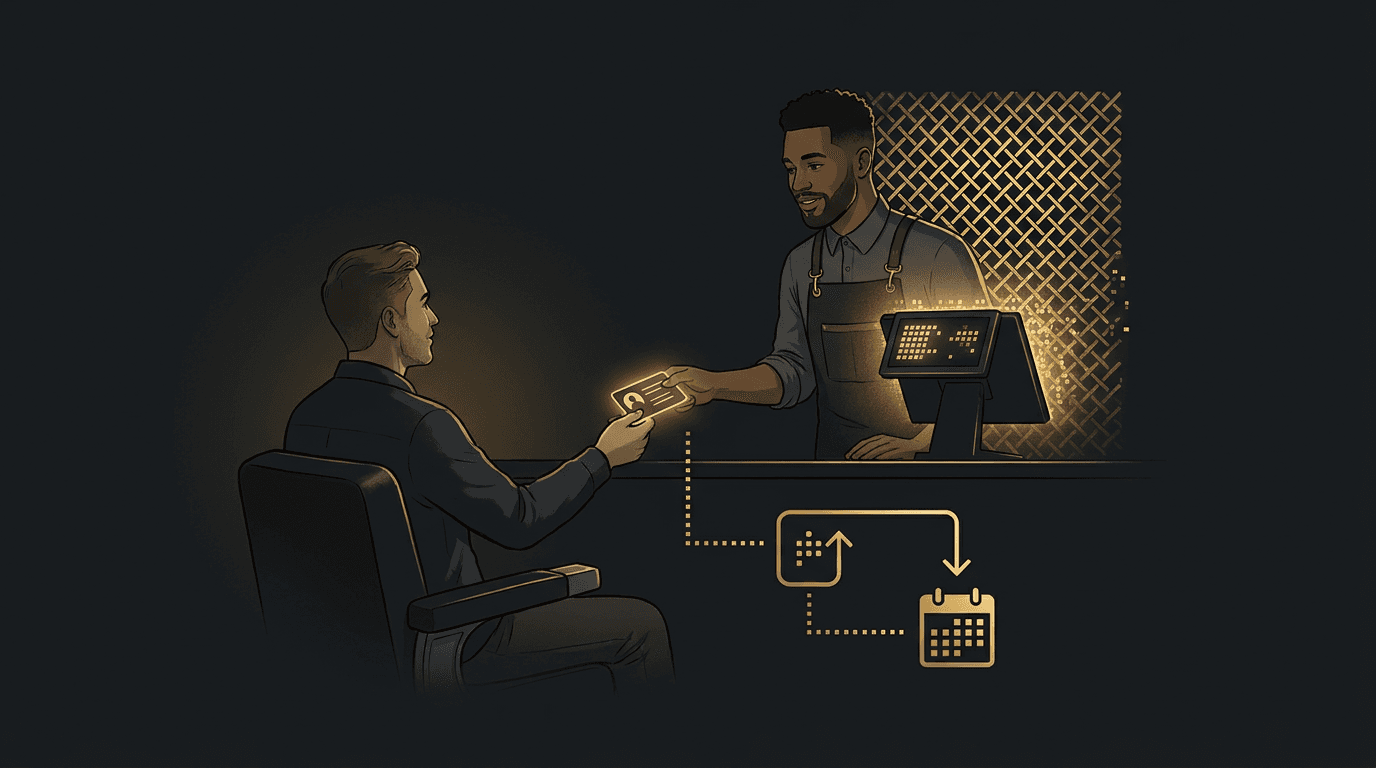
You spent money to get that client in the door. Ads, referrals, your time, your reputation. They sat in your chair, paid, said "thanks, see you soon" — and walked out with nothing on the calendar. If you've ever wondered how to get clients to rebook appointments, that moment is exactly where the answer lives.
That's the most expensive moment in your business. And most owners don't even see it happening.
The fix isn't charm or a loyalty punch card. It's a system that puts the next visit on the books before they leave the building. Miss that window and you're paying full price to reacquire someone you already had.
Here's a principle every operator knows in their gut but rarely acts on: winning a brand-new customer costs far more — in ad spend, time, and effort — than keeping one who already trusts you. Yet most SMBs pour budget into the top of the funnel while the back door swings wide open.
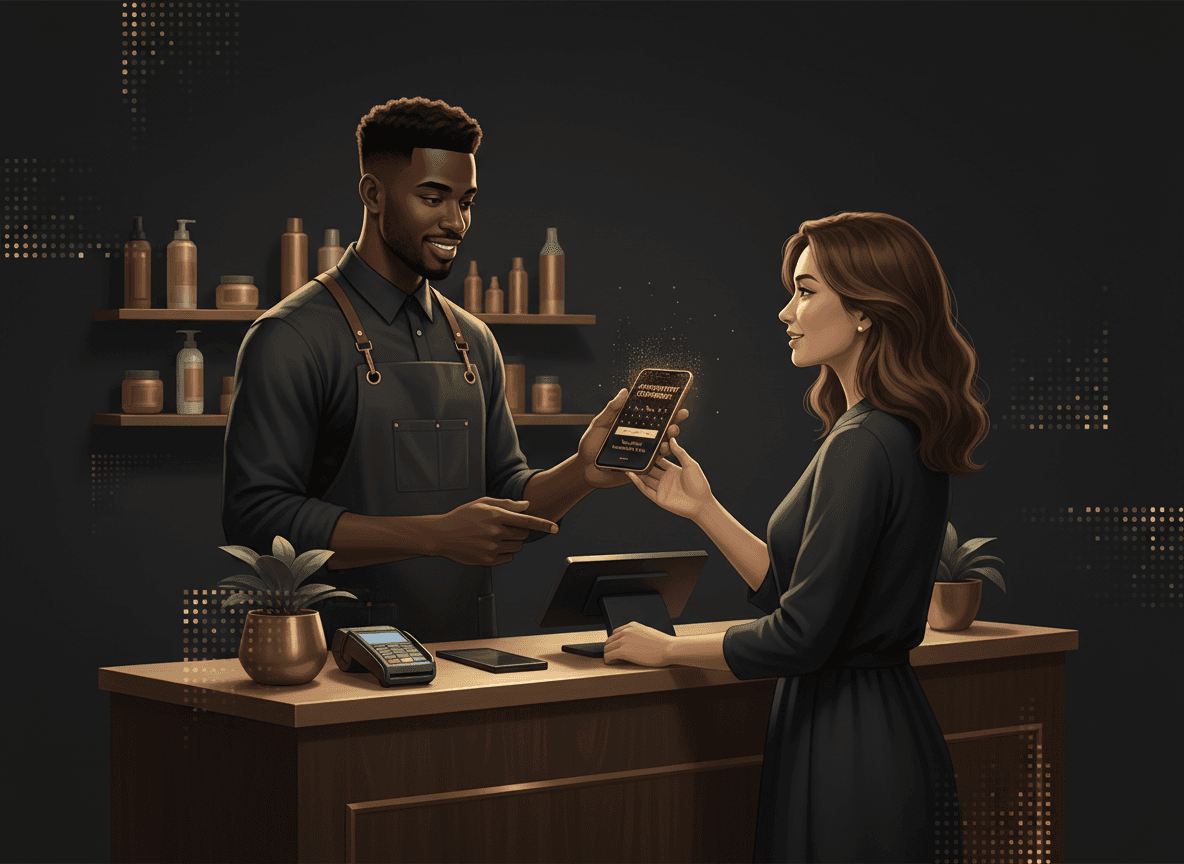
Here's the formula that runs your repeat revenue:
Rebook rate × visit frequency × average ticket = annual value per client.
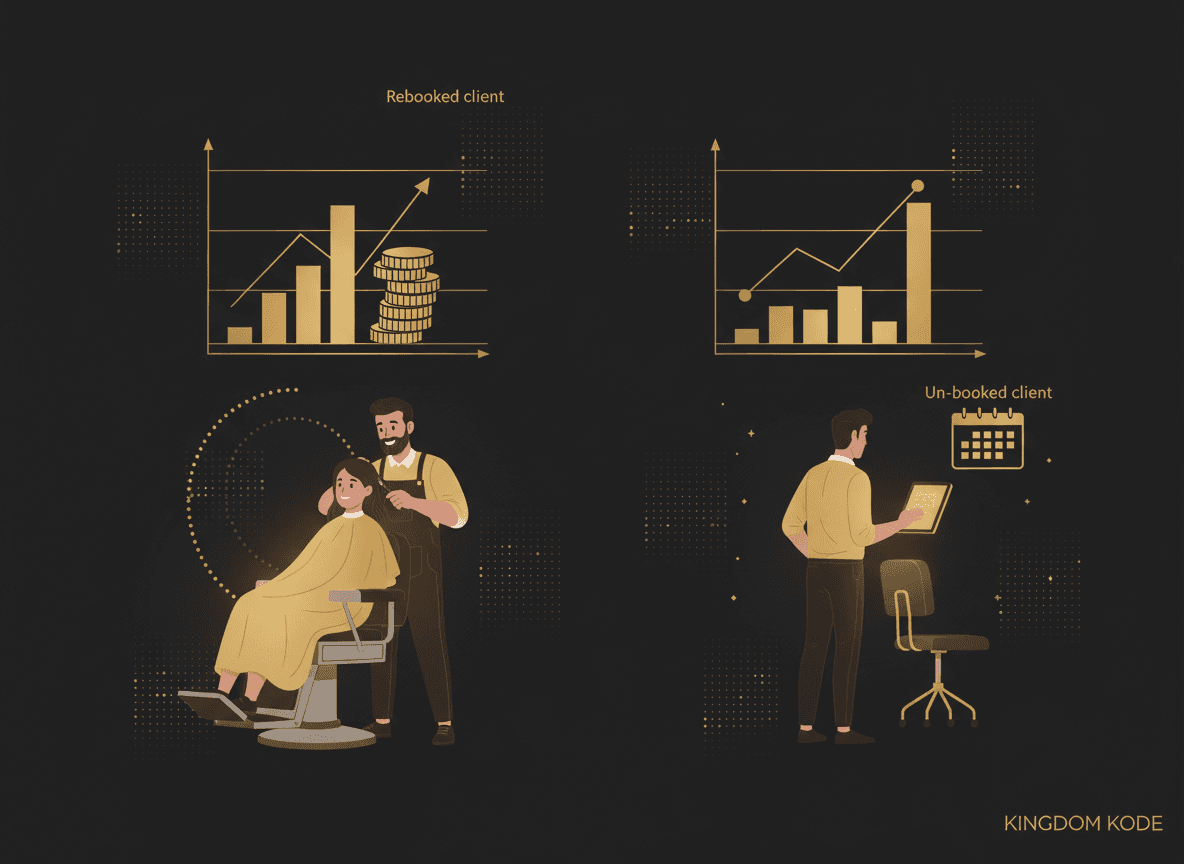
Let's make it concrete with a hypothetical. Picture a barbershop doing $30k/mo with a $35 average ticket.
Same client. Same haircut. More than double the annual value — decided entirely by whether the next appointment got booked before they paid.
Now multiply that gap across every client who walks out un-booked. That's your silent leak. It doesn't show up as a bad month. It shows up as flat repeat revenue while your chair time stays busy and your bank account stays the same.
The rebook doesn't happen when you "remind" them next month. By then you're competing with their inbox, their inertia, and the shop down the street. You rebook them while they're standing in front of you, happy, wallet already out.
Three moves, in order of impact:
1. Make rebooking the default, not the exception. The question isn't "Do you want to book your next one?" It's "You're on a 4-week cycle — want the same day and time, or Saturday morning?" You've moved the decision from if to when. Assume the next visit exists.
2. Book it before payment, not after. Once the card is charged, the transaction is closed in their mind and they're halfway out the door. Fold the next appointment into the check-out flow itself — schedule, then pay. This one sequencing change is worth more than any discount.
3. Confirm it to their phone before they leave. A booked appointment they can see in their calendar is a commitment. A vague "I'll call to schedule" is a coin flip you usually lose.
None of this requires you to be pushy. It requires the next appointment to be part of the process instead of an afterthought you hope someone remembers.
Most booking tools stop the second the appointment starts. Most POS systems start the second it's time to pay. The gap between them is where your retention dies.
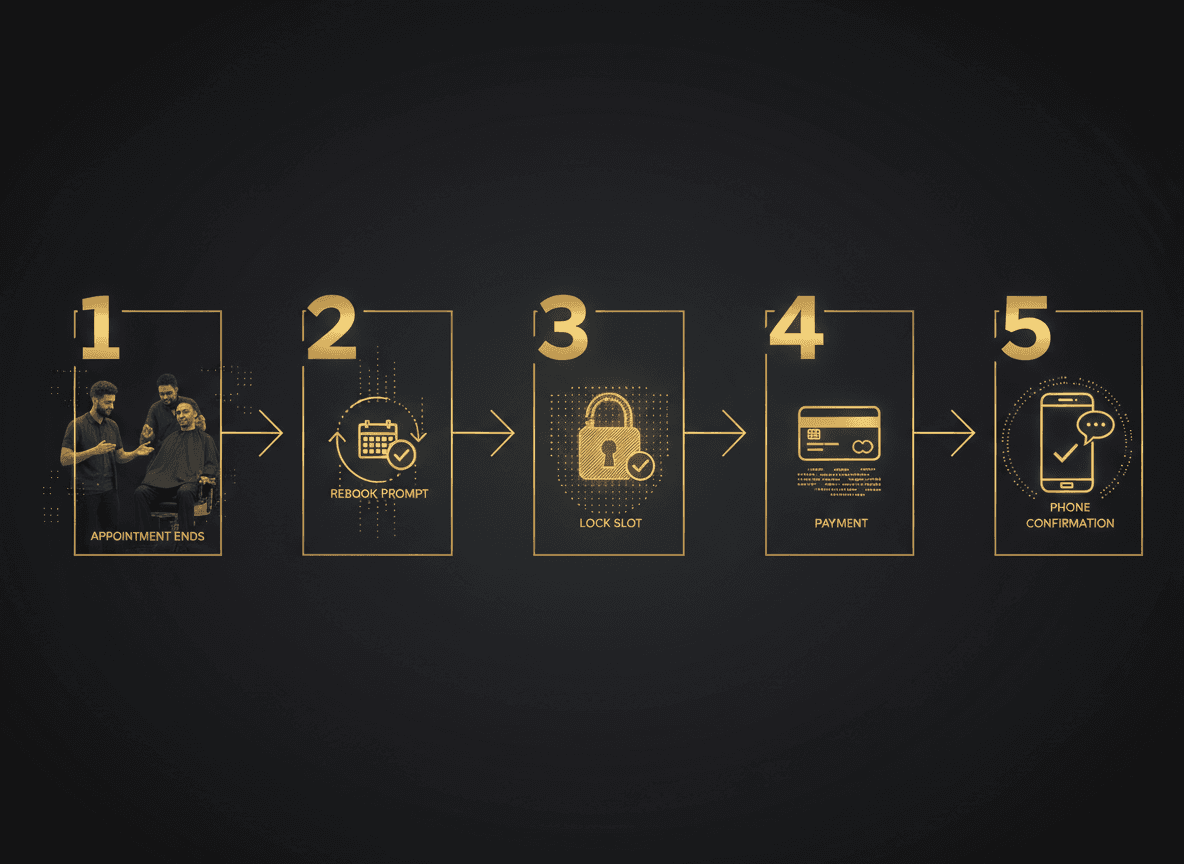
An integrated booking + check-out flow closes it:
That's a 20-second addition to a transaction you're already running. Do it 40 times a day and you've engineered your repeat revenue instead of praying for it.
The magic isn't the software. It's that the rebook stops depending on whether your front desk remembered to ask on a busy Saturday.
Some clients already lapsed. That list is money sitting in a drawer.
Most owners have no visibility into it — they can't tell you who hasn't been in for 60, 90, 120 days. If you can't see who's gone, you can't win them back.
A simple win-back sequence, triggered automatically off return-rate data:
Each message links straight to your booking flow. No phone tag. No "call us during business hours." One tap, back on the calendar.
Win-back won't reactivate everyone — it doesn't have to. To see why it matters, imagine pulling back even a modest slice of your lapsed list at each client's real annual value. For most shops, that math turns into a meaningful chunk of revenue you already earned once — from a list you already own. Run your own numbers and see.
Every shop on your street runs ads. Very few run a retention engine.
When booking and check-out are one connected system, three things compound:
That's the difference between a business that refills the top of the bucket forever and one that stops the leak at the bottom. Same traffic. Very different bank balance at year end.
The owners winning right now aren't necessarily better at their craft. They just stopped letting paying customers walk out with an empty calendar.
Before you build anything, get the number. What's your actual rebook rate? What's a retained client worth vs. a lapsed one? Where exactly is the revenue draining out?
That's what the free Revenue Code Diagnostic is built to surface — it maps where your repeat revenue is leaking and what closing it is worth to your specific numbers.
Run your free Revenue Code Diagnostic and see the gap for yourself. If you want us to build the booking + check-out engine that closes it, that's the part we handle — book a pricing call when you're ready.
Your best customers are already walking out the door. The only question is whether the next appointment is on the books before they do.
Most SaaS founders treat the free trial as a waiting room. The ones converting at 25% or higher treat it as a structured sales system. Here is how to build that system.
Read moreA product roadmap tells you what you are building. A revenue engine tells you whether it is making money. Most SaaS founders only have one of these, and it is the wrong one.
Read more