Blog - The latest articles and news
Stay up-to-date with the latest industry news as our marketing teams finds new ways to re-purpose old CSS tricks articles.
Stay up-to-date with the latest industry news as our marketing teams finds new ways to re-purpose old CSS tricks articles.
by Kingdom Kode Team, Digital Innovation

You're booked solid. Waitlist most weeks. And your bank account doesn't reflect any of it. If that's you, the fastest fix isn't more leads or a fifth chair — it's learning how to raise prices without losing customers. Because a fully booked calendar at old prices isn't success. It's a business quietly subsidizing its customers.
That's not a marketing problem. That's a pricing problem.
Let me show you the leak.
When was the last time you raised prices? If the answer is "a couple years ago" or "I bumped one service $5," you're bleeding margin every single day.
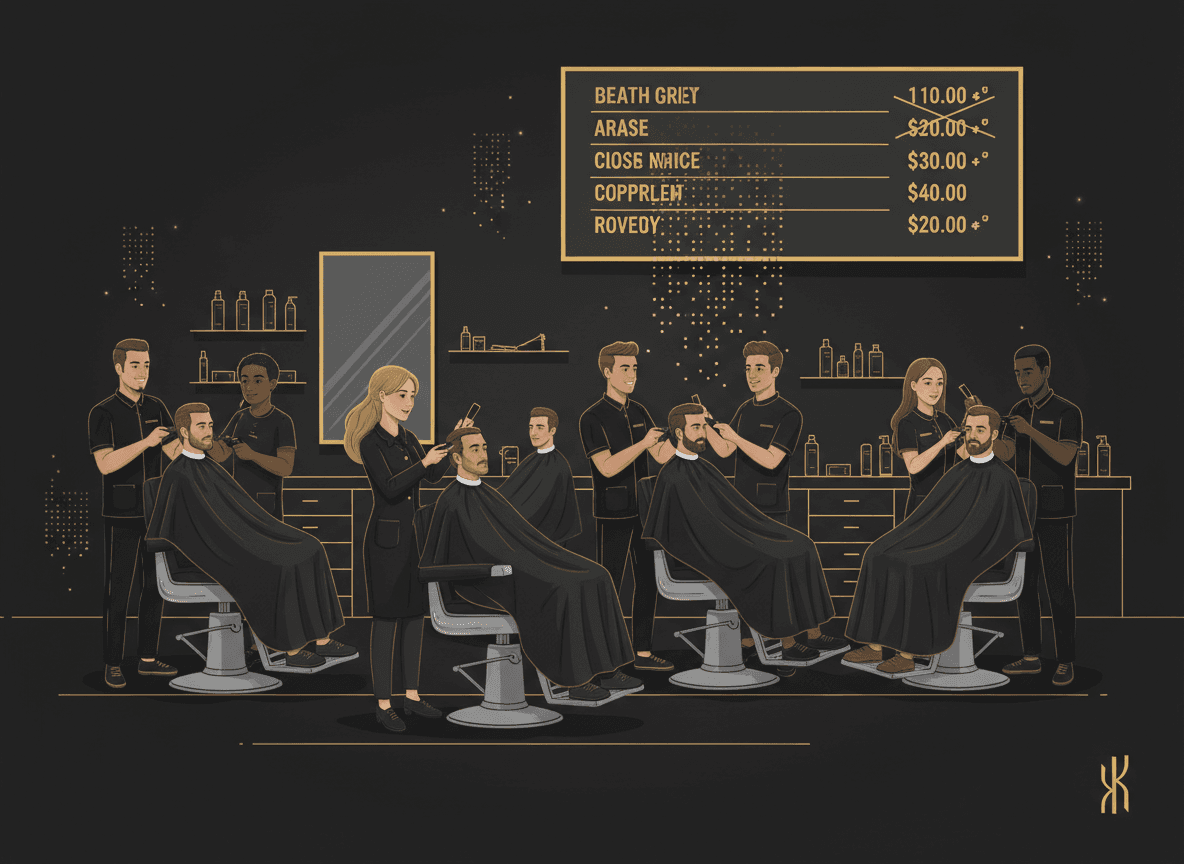
Here's why underpricing is worse than every other problem you're chasing:
Every lever except one requires more time or more customers you don't have room for. Price is the only lever that adds revenue without adding a single minute to your day.
A barbershop doing $30k/mo at capacity has exactly one move left. It's not a fifth chair. It's the price on the wall.
Owners freeze on pricing because they imagine the worst: raise prices, customers walk, revenue tanks. So let's actually do the arithmetic instead of fearing it.
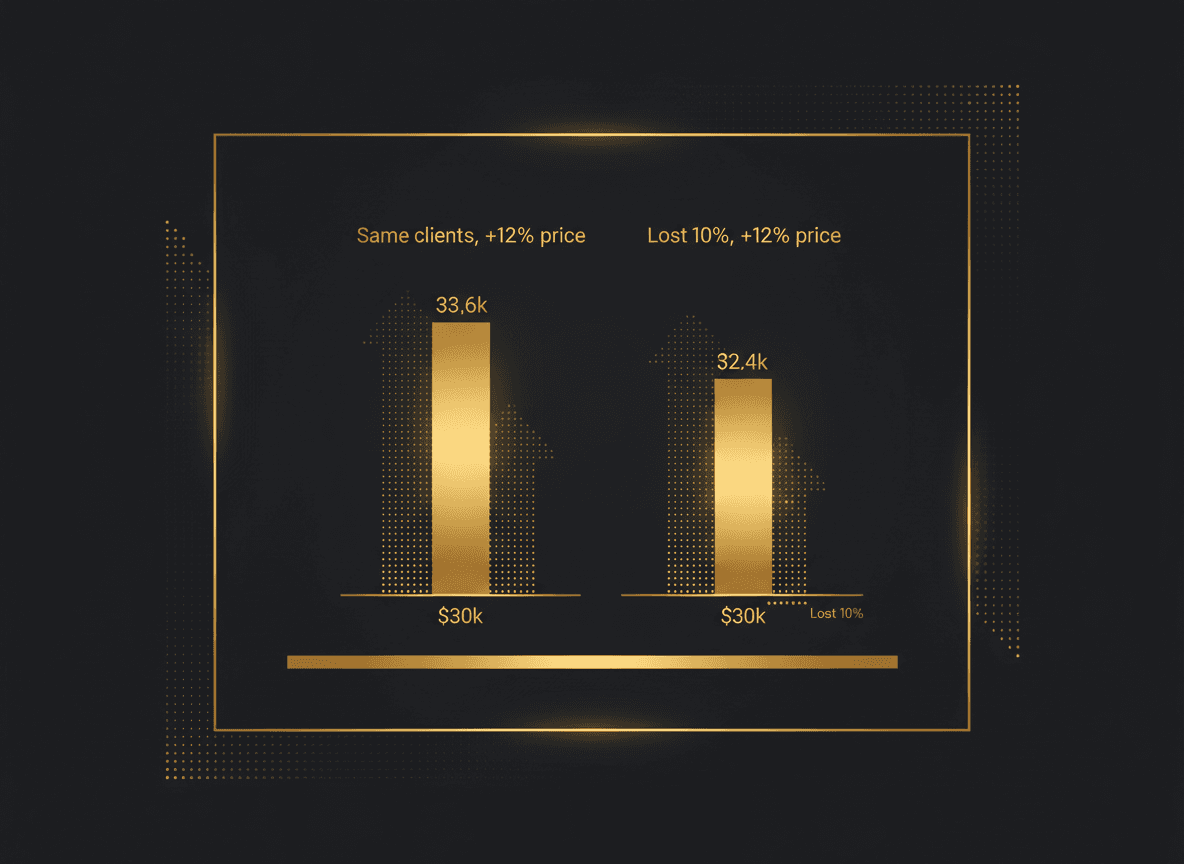
Say you do $30,000/mo. You raise prices 12%.
If you lost zero customers, you'd make $33,600/mo — an extra $3,600, or $43,200 a year, for changing a number.
Now assume the scary version: you lose 10% of your customers over the raise. You're still charging the remaining 90% the higher price:
You lost 10% of your clients and still made more money — while freeing up 10% of your calendar. That's less stress for more dollars.
The math only turns against you if churn dramatically outruns the increase. And on a 10-15% raise, it almost never does — most customers don't leave over a few dollars on a service they already like and rebook. They just grumble for one visit and forget.
Underpricing feels safe. The math says it's the risky choice.
Most owners sabotage the raise in the delivery. They over-explain, apologize, and signal guilt — which teaches customers the new price is negotiable.
Don't do that. Rules:
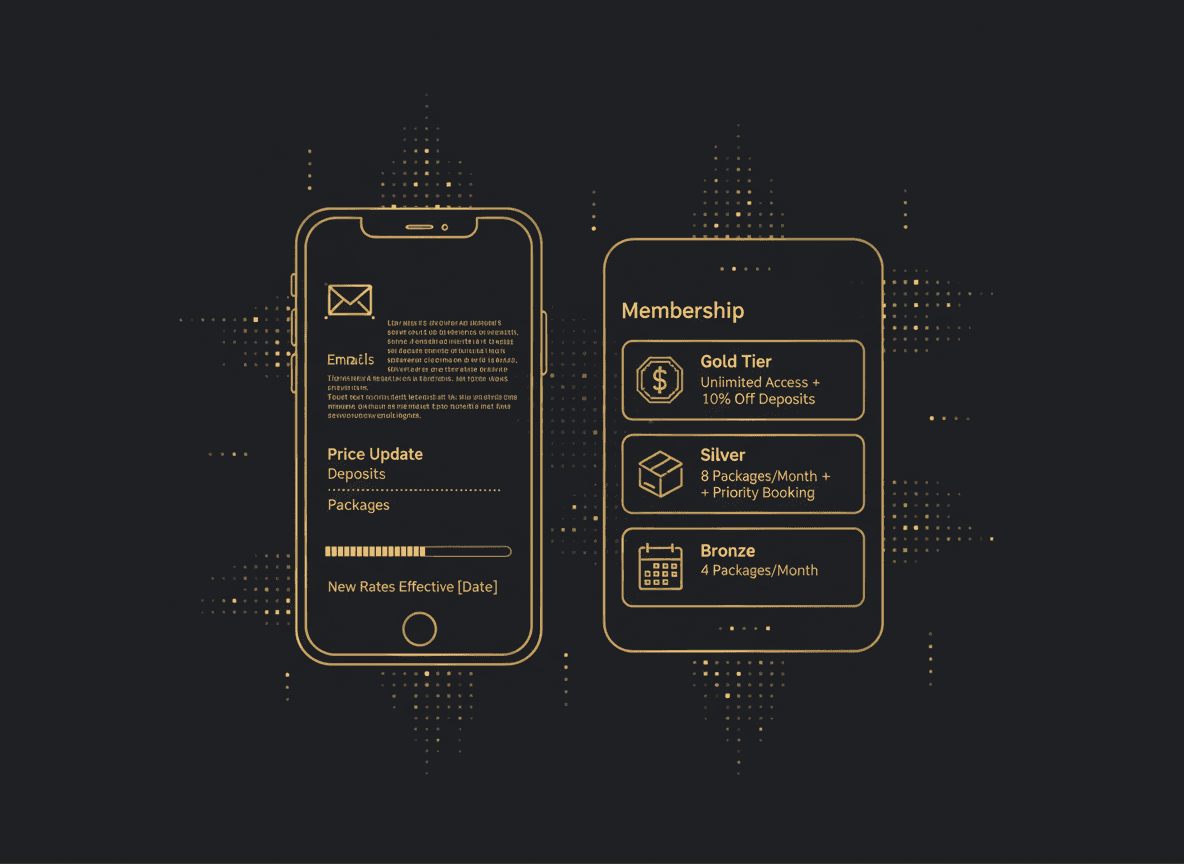
Announce, don't ask. "Starting March 1st, our prices are updating." Not "we're so sorry but we might have to maybe raise…"
Give lead time. 2-4 weeks' notice. It's respectful and it triggers a wave of pre-bookings at the old price — a nice cash bump on the way in.
Anchor to value, not costs. Nobody cares that your rent went up. They care what they get. "New booking system, easier rescheduling, same quality you count on."
Keep it short. One text. One sign. One email. The more you justify, the weaker you look.
Say it once, clearly, and move on like it's already normal — because it is.
If raising prices on your loyal base makes your stomach drop, don't start there. Start with people who never knew the old price.
Raise the rate for new customers only. They have no anchor. To them, your new price is just the price. Existing regulars keep their rate for now.
Watch two things for 30-60 days: do new bookings slow, and do new clients rebook? If they keep coming and coming back, you have your proof. Now roll the increase to your existing base with total confidence — you're not guessing, you have data.
This is how you de-risk the decision that scares you most.
Pricing isn't just a number — it's the structure around the number. And structure is what makes a raise stick instead of sting.
Three tools quietly kill price sensitivity:
Deposits. When a client puts $20 down to book, they've committed. No-shows drop, and the transaction stops feeling like a debate at the counter.
Packages. "$300 for 6 cuts" reframes the conversation from per-visit price to total value. The customer stops mentally re-pricing every visit.
Memberships. A monthly plan turns a price-sensitive one-off decision into predictable recurring revenue. Members don't churn over a $5 bump — they're locked into a relationship, not a transaction.
This is the whole point of building a Revenue Engine instead of a booking page. When integrated payments, deposits, packages, and memberships are running underneath your business, a price increase doesn't land as a shock — the system absorbs it. Customers experience a smoother, more premium operation and a higher price at the same time, so the two justify each other.
Raising prices on a duct-taped setup is scary. Raising them on an engine built to hold the weight is just Tuesday.
Being fully booked at 2019 prices isn't a badge of honor. It's the clearest signal you exist that you're leaving money on the table every day you wait.
Run the math on your own numbers. Pick a raise. Test it on new customers. Then make it permanent.
Want to know exactly where your business is leaking margin — and how much a repricing is actually worth to you? Run your free Revenue Code Diagnostic. It shows you the gaps in your pricing, payments, and retention in a few minutes, no sales pitch required.
You've already done the hard part — building demand. Stop giving it away.
Most SaaS founders treat the free trial as a waiting room. The ones converting at 25% or higher treat it as a structured sales system. Here is how to build that system.
Read moreA product roadmap tells you what you are building. A revenue engine tells you whether it is making money. Most SaaS founders only have one of these, and it is the wrong one.
Read more