Blog - The latest articles and news
Stay up-to-date with the latest industry news as our marketing teams finds new ways to re-purpose old CSS tricks articles.
Stay up-to-date with the latest industry news as our marketing teams finds new ways to re-purpose old CSS tricks articles.
by Kingdom Kode Team, Digital Innovation

You see their name everywhere. On Facebook. On Instagram. On the top of Google when someone searches your service. And you're wondering: why are my competitors always showing up in ads and I'm not?
Here's the part that should bother you more. Every day they run ads and you don't, they're quietly buying customers who would have called you. You don't see it happen. There's no alarm. It just shows up as a slow, flat month you can't quite explain.
That's the silent market-share bleed. Let's stop it — the right way, not the expensive way.
Good news: their entire ad strategy is public. You don't have to guess.
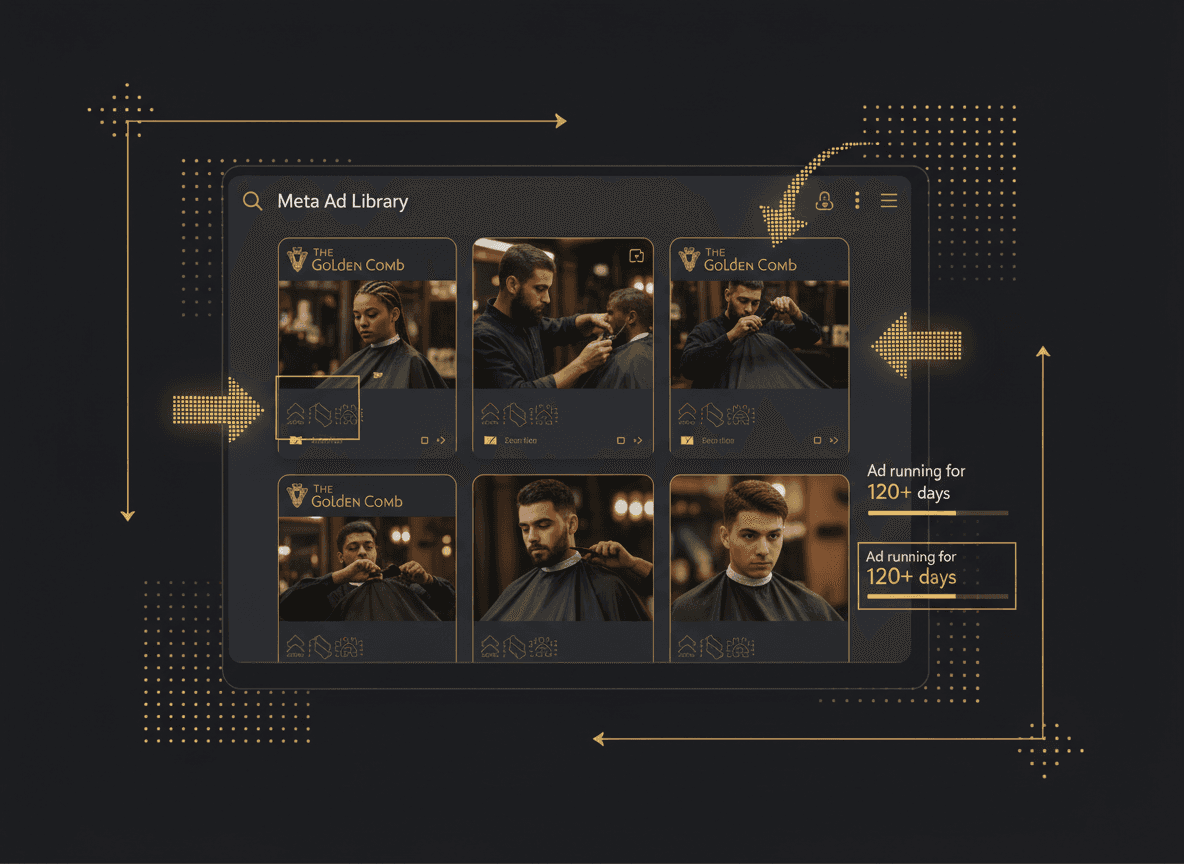
Meta Ad Library. Go to facebook.com/ads/library, pick your country, and search your competitor's business name. You'll see every active ad they're running on Facebook and Instagram right now — the images, the copy, the offers. Free. No login for the basics.
Google Ads Transparency Center. Search their name at adstransparency.google.com. You'll see the search and display ads they're paying for.
TikTok Creative Center and LinkedIn Ad Library do the same for those platforms.
Spend 30 minutes here and you'll learn more than a $2,000 strategy deck. Look for three things:
Now you know the game. Before you enter it, understand why most SMBs light their ad budget on fire.
Here's the mistake that costs owners thousands: they see competitors advertising, panic, and turn on ads before the machine behind the ad exists.
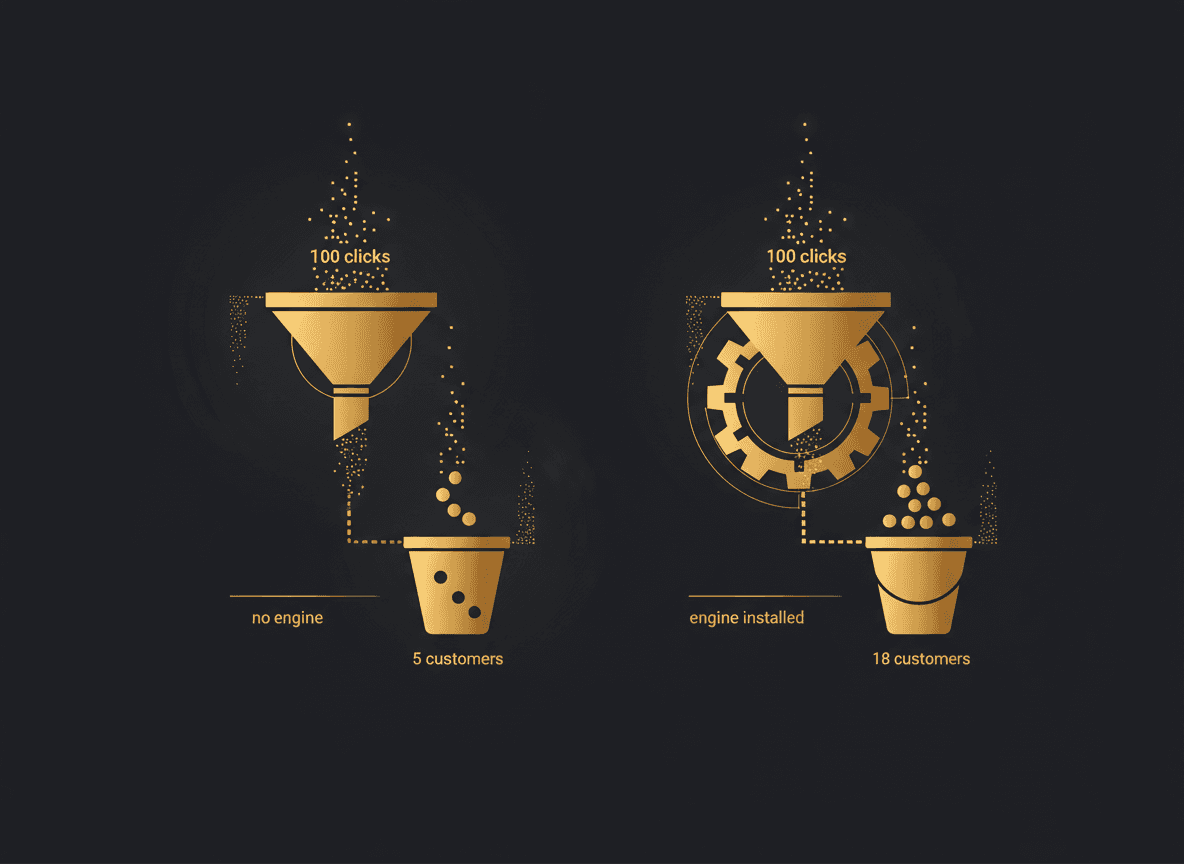
An ad's only job is to send you a lead. What happens after the click decides whether you make money. And for most SMBs, what happens after the click is a disaster.
Run the math on a barbershop doing $30k/mo that turns on $1,500 in ads:
You paid for 100 clicks and captured 5 customers. Your competitor with the same ad and a real booking system captured 18.
Same ad. Same spend. Same market. Wildly different result. The difference isn't the ad — it's the engine the ad feeds into.
Pouring ad traffic into a broken system doesn't just waste the ad spend. It teaches you the wrong lesson.

You'll run ads, lose money, and conclude "ads don't work for my business." Then you turn them off — and hand the entire market back to the competitor you were worried about in the first place.
Ads didn't fail. The bucket leaked. You just paid to prove it.
Before a single dollar goes to Meta or Google, three things need to be installed:
Get these right and something powerful happens: every ad dollar starts compounding. More reviews lift your rating, which lifts your click-through, which lowers your cost per lead, which means the same budget buys more customers next month.
Two different jobs. Owners confuse them constantly.
Building the engine is booking, follow-up, and reputation working together so every lead — paid or not — gets captured and converted. This is the foundation. It makes your existing traffic worth more today, before you spend a cent on ads.
Scaling ad presence is turning on paid traffic to feed that engine more leads. This is the multiplier. It only works after the foundation is built.
Do them in the wrong order and you're the barbershop capturing 5 out of 100. Do them in the right order and you're the one capturing 18 — and now you can outspend your competitor because your economics are better.
The honest answer to "should I run ads?" is: not yet, unless the engine is already installed. Fix the bucket first. Then pour.
Your competitors showing up in ads isn't the problem. The problem is you don't know whether your business can actually convert traffic if you turned ads on tomorrow — or whether you'd just fund a slow leak.
Run your free Revenue Code Diagnostic. It shows you exactly where your booking, follow-up, and reputation systems are leaking customers today — so you know whether to fix the engine, turn on ads, or both, and in what order.
See where you stand before you spend. Then go take that market share back.
Most SaaS founders treat the free trial as a waiting room. The ones converting at 25% or higher treat it as a structured sales system. Here is how to build that system.
Read moreA product roadmap tells you what you are building. A revenue engine tells you whether it is making money. Most SaaS founders only have one of these, and it is the wrong one.
Read more