Blog - The latest articles and news
Stay up-to-date with the latest industry news as our marketing teams finds new ways to re-purpose old CSS tricks articles.
Stay up-to-date with the latest industry news as our marketing teams finds new ways to re-purpose old CSS tricks articles.
by Kingdom Kode Team, Digital Innovation
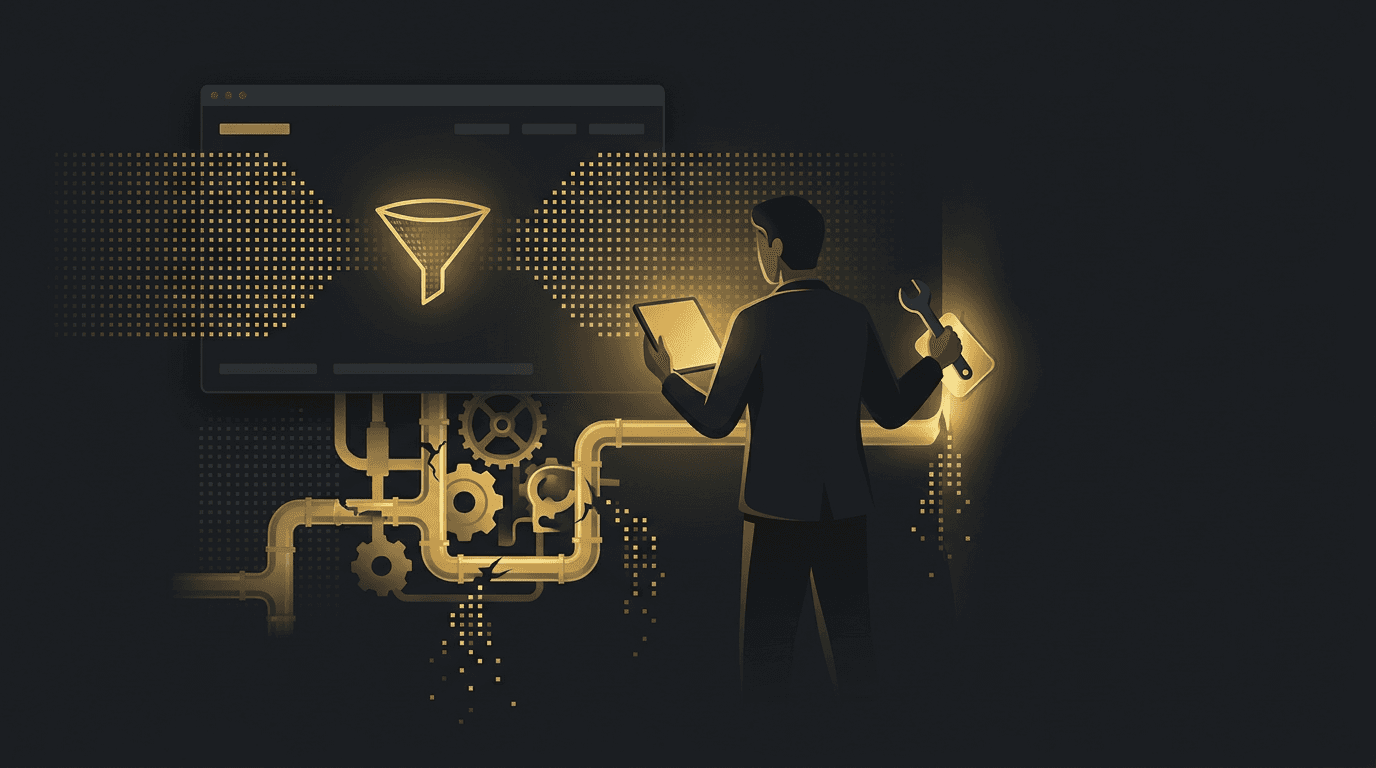
You boosted a post. You ran one ad. Maybe you hired a "marketing guy." And now you're staring at the results wondering why my Facebook ads aren't getting bookings when the clicks are clearly coming in.
Here's the hard truth: your ad is probably fine. The money is leaking out the back.
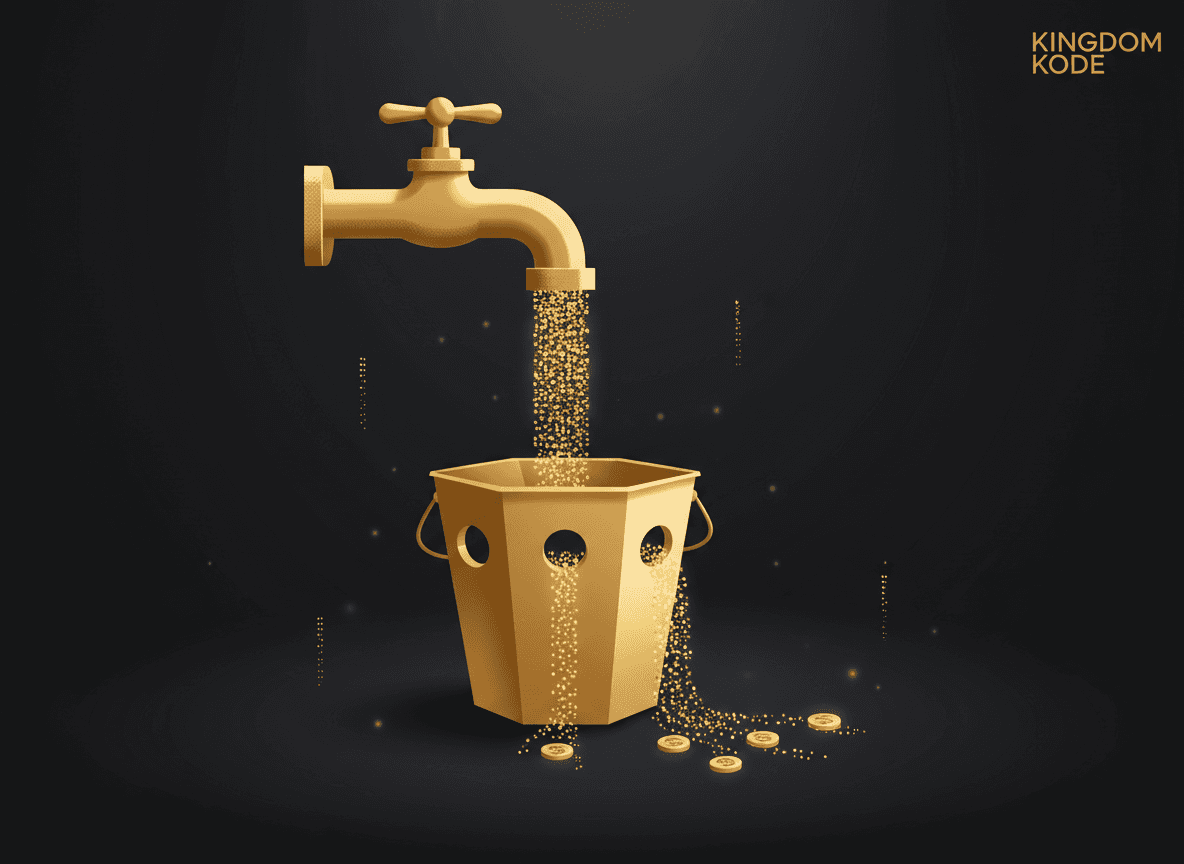
Running one ad isn't a strategy. It's a faucet pointed at a bucket full of holes. You can turn the water up all you want — pour more budget in — but if the bucket leaks, you're just paying more to lose more.
Let me show you exactly where the water goes.
Every paid click travels a path before it becomes money in your account. Break it down:
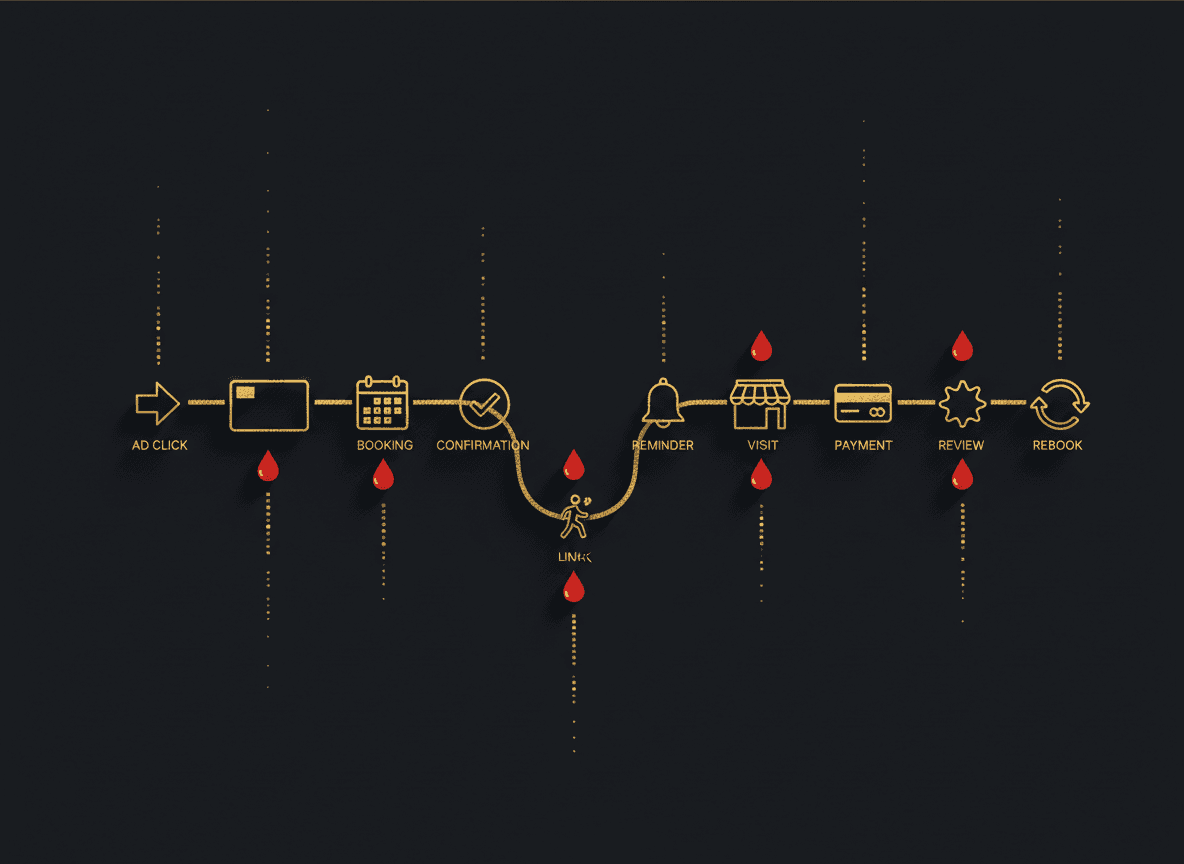
Ad click → landing page → booking action → confirmation → reminder → the visit → payment → review → rebook.
That's the chain. An ad only touches the first link. Everything after it is your back end — and that's where most owners are quietly bleeding.
A barbershop doing $30k/mo — the kind of business we build for — doesn't have an ad problem. It has a conversion problem hiding behind an ad budget. Let's walk the chain.
Someone taps your ad on their phone. If your page crawls to load, a chunk of that hot traffic bounces before they read a single word. Slow pages quietly kill clicks you already paid for.
The survivors hit a wall: a contact form. "Fill this out and we'll get back to you." Nobody impulse-buying at 9pm wants to wait for a callback. They came ready to book. You made them wait. Dead lead.
Fast page. One clear action. That's the bar.
This is the big one. The click was hot. The intent was there. And your only options were "call us" or "DM us."
Calls go to voicemail. DMs get buried. The customer moves on to the competitor who let them pick a time in 20 seconds.
You paid for that click. Your competitor got the booking for free. Instant booking isn't a nice-to-have — it's the thing your ad spend was buying access to.
Say they do book. If nothing hits their phone after — no confirmation, no reminder the day before — a chunk of them simply forget or flake.
A no-show is worse than a lost lead. You paid the ad cost, held the slot, and got nothing. That empty chair is pure loss.
An automated confirmation plus a reminder text cuts no-shows hard. It costs pennies. Most owners just don't have it wired up.
They showed. You did great work. Then... silence.
No automatic ask for a review. No nudge to rebook. So your happy customer never leaves the 5-star review that lowers your future ad costs, and never books their next appointment on their own.
Every review you don't collect makes your next ad more expensive. Every rebook you don't trigger means you're paying to reacquire someone you already won.
Here's the reframe that changes everything.
More ad budget doesn't fix a broken back end. It magnifies it. Spend $2k instead of $500 on a leaky funnel and you just lose four times as fast.
But flip it. Install the Revenue Engine first — instant booking + confirmations and reminders + smooth check-in/out and payment + an automatic review and rebook flow — and now every dollar you feed the ads compounds.
Same click. Same budget. But now it converts, shows up, pays, reviews, and comes back. The ad stops being an expense and starts being an investment with a return you can actually measure.
That's the difference between "I ran ads and it didn't work" and "I can put in $1 and pull out $3 predictably."
The move isn't a better ad. It's not a bigger budget. It's not a new agency promising a magic audience.
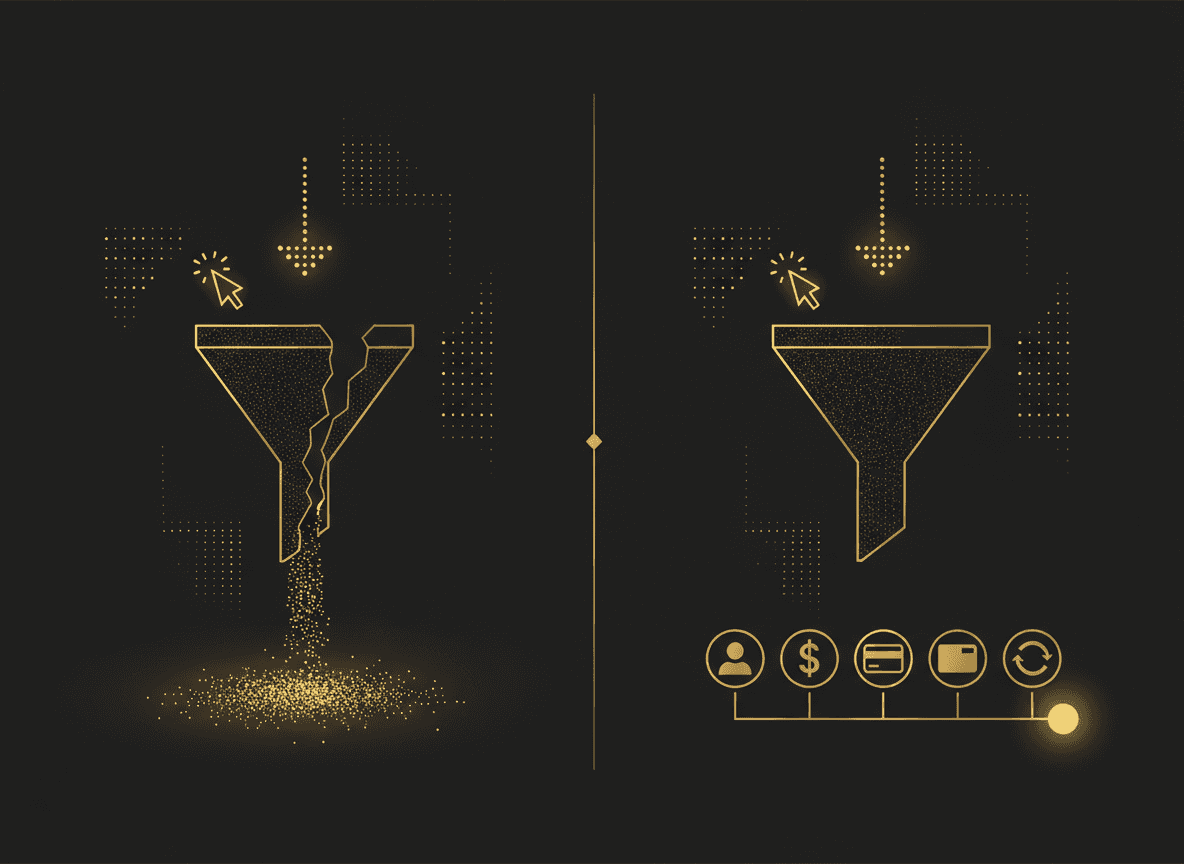
The move is to plug the leaks, then turn up the faucet.
Build the engine that turns clicks into booked, confirmed, paid, and repeat customers. Then — and only then — scaling ads makes sense, because now you're pouring water into a bucket that holds.
You already have the demand. The clicks prove it. You're just losing them on the way to the cash register.
Before you spend another dollar on ads, find out where your specific bucket is leaking. Is it the page? The booking step? The no-show gap? The missing review loop?
Run your free Revenue Code Diagnostic — it pinpoints exactly which link in your chain is losing the most money, so you fix the leak that pays back the fastest.
Stop paying to lose leads. Fix the engine, then scale.
Most SaaS founders treat the free trial as a waiting room. The ones converting at 25% or higher treat it as a structured sales system. Here is how to build that system.
Read moreA product roadmap tells you what you are building. A revenue engine tells you whether it is making money. Most SaaS founders only have one of these, and it is the wrong one.
Read more